Voluum — Case study
Tags Enhancement. Organisation at enterprise scale.
Voluum's biggest clients ran thousands of campaigns at once — and ignored the one feature designed to keep them organised. Tags weren't broken; they were buried. The fix was deliberately small, and that was the point.
Context
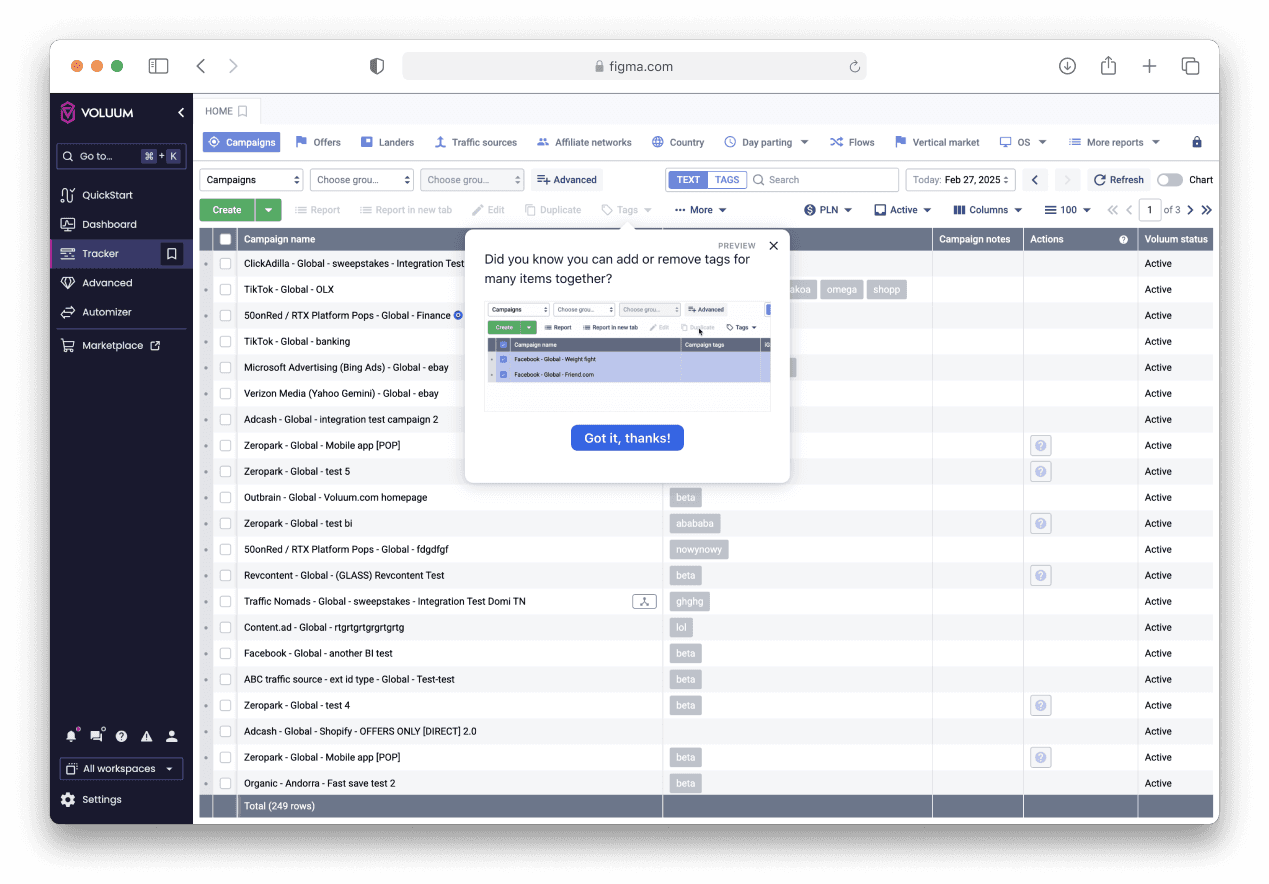
Voluum serves expert media buyers running sophisticated operations — thousands of live campaigns, each with multiple entities to manage. The platform offered several ways to filter and organise, and tagging should have been the most flexible of them. Instead, usage data showed tags were neglected — especially by the biggest clients, the very users who needed them most.
Problem
- Users consistently named weak filtering as a key pain point
- Tags were buried — 5 clicks to modify, 2 just to access
- Power users compensated with coded naming schemes in entity names
- Outside API-driven workflows, large clients barely used tags at all
- Filtering and grouping worked, but not at enterprise scale
We validated this through CS, AM and PM teams, deep dives into usage patterns, and interviews with two groups: active tag users, and clients who had requested better filtering.
Solution
Instead of redesigning the tagging system, we prioritised low-effort, high-impact changes that fit existing workflows:
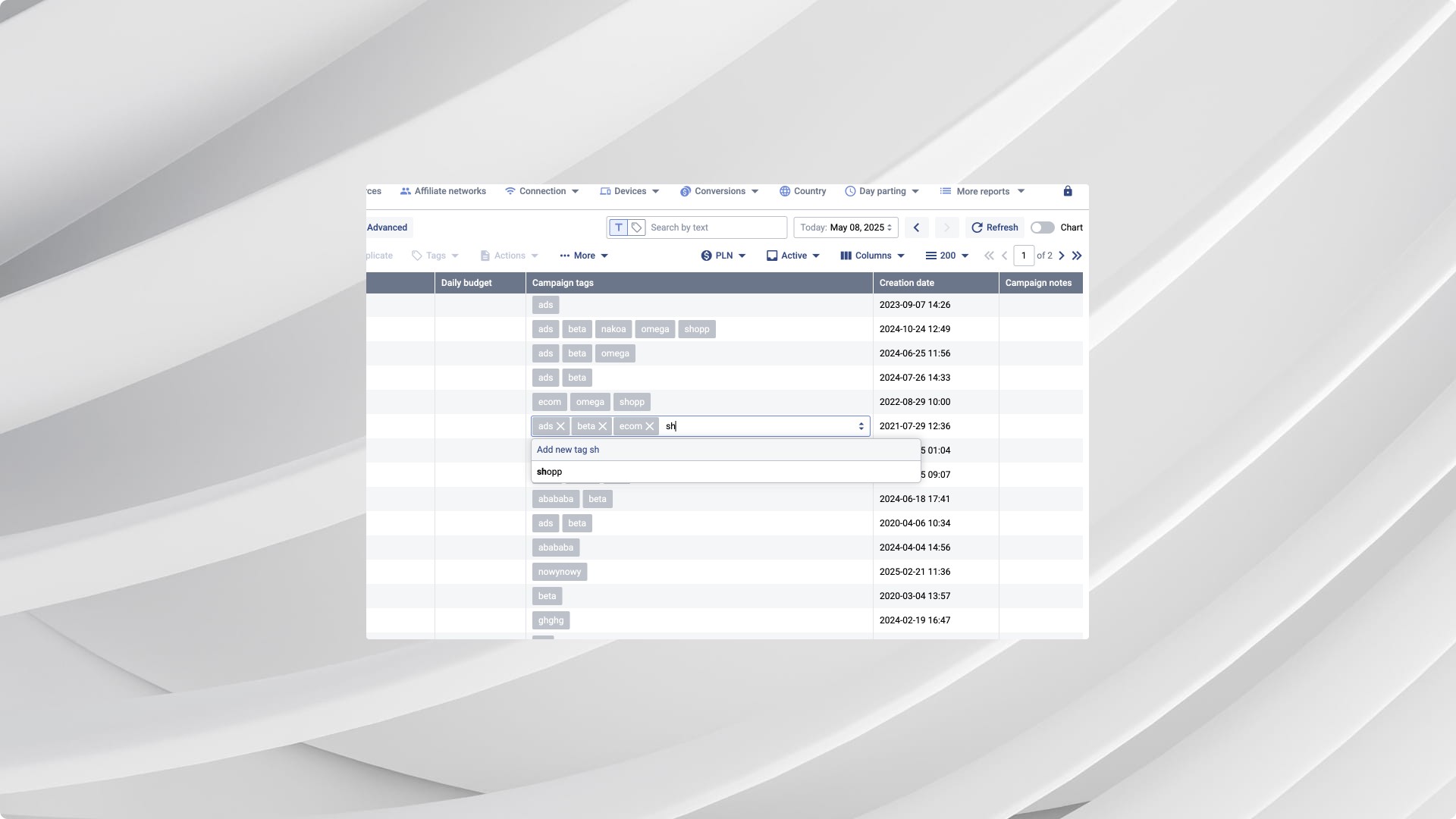
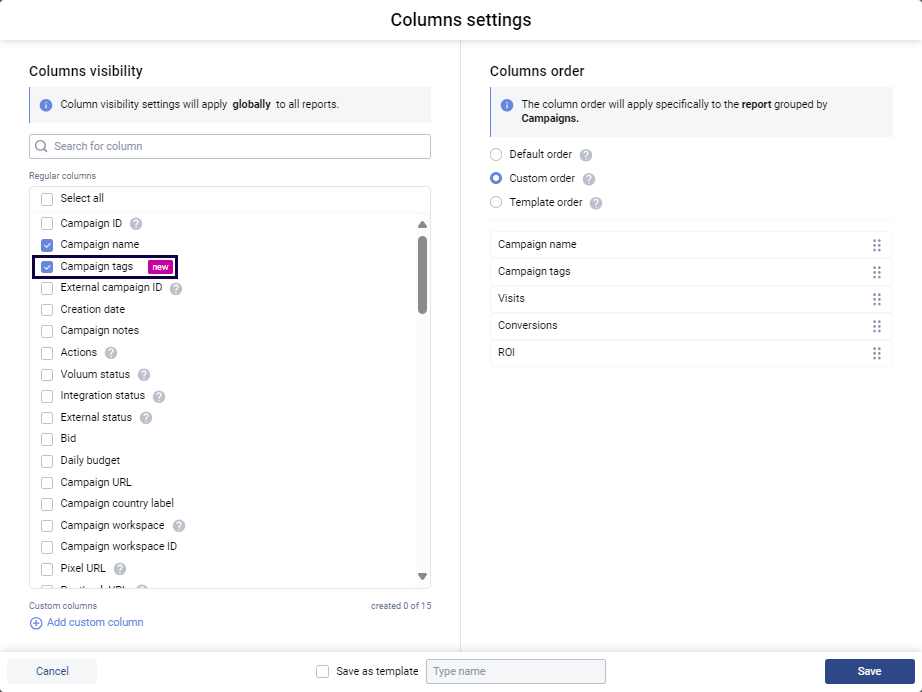
- Tags in their own column — visible by default, not hidden in a drawer
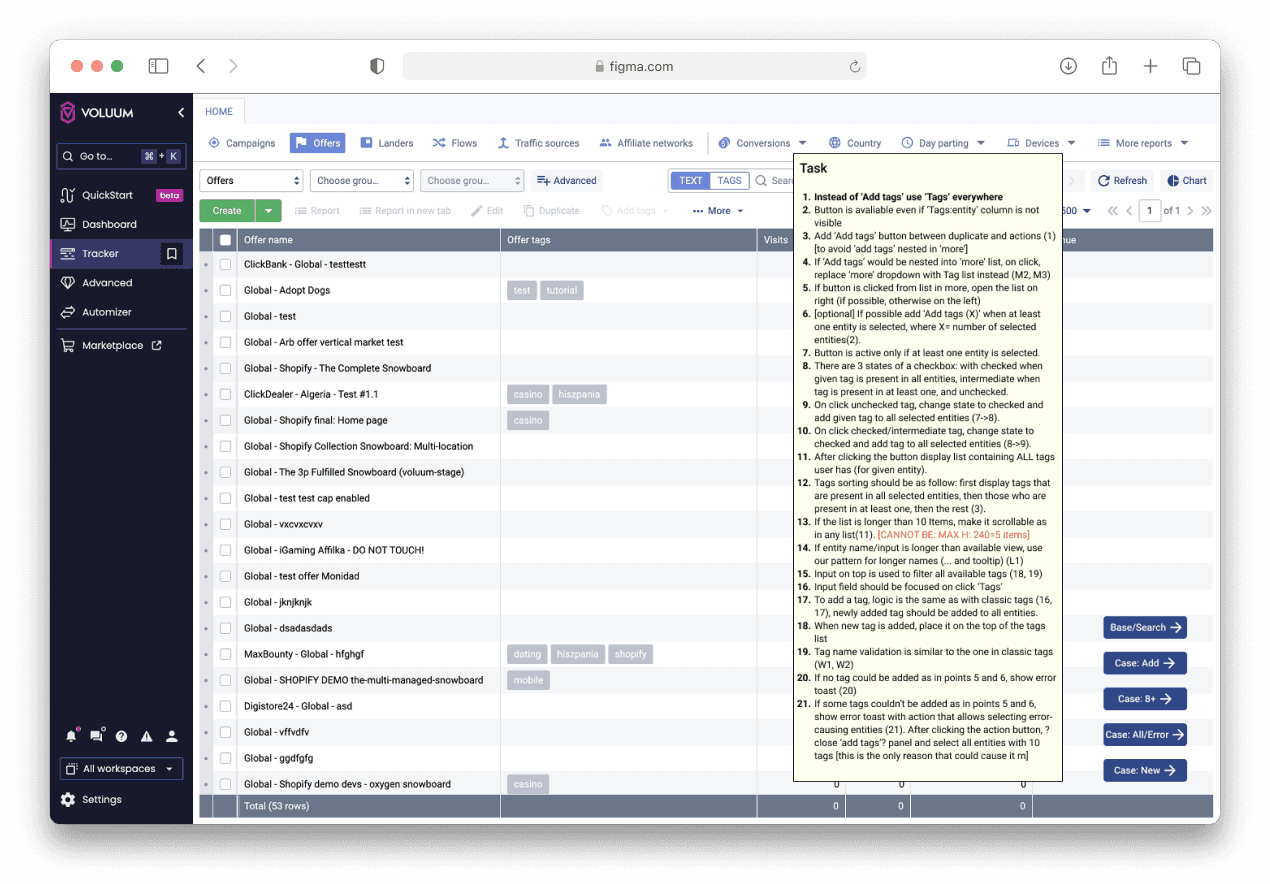
- Bulk editing using the same interaction pattern as other bulk actions users already knew
- Inline tagging retained for quick, single-entity edits
Shipped — and public
The improvements reached production in two increments announced in Voluum's public changelog: first tags as a visible, editable report column, then bulk tag editing — shipping the low-effort core first and layering the power-user workflow on top.
Results
+9%overall tags adoption after release
+11%adoption among large clients (1000+ active campaigns)
+15%average tags per enterprise client
- Advanced users reported a disproportionately positive impact on daily workflows
- Laid the groundwork for future entity-management improvements
Respect the habits of expert users — unlocking an existing feature beat redesigning it, and proved that incremental, targeted changes deliver measurable impact.