Voluum — Case study
Campaign Creation Wizard. Onboarding that teaches by doing.
Voluum's flows were built for experienced media buyers — and it showed. When onboarding calls were removed from basic plans, churn went up. The answer wasn't more documentation; it was a guided quick-start that walks users through a real setup.
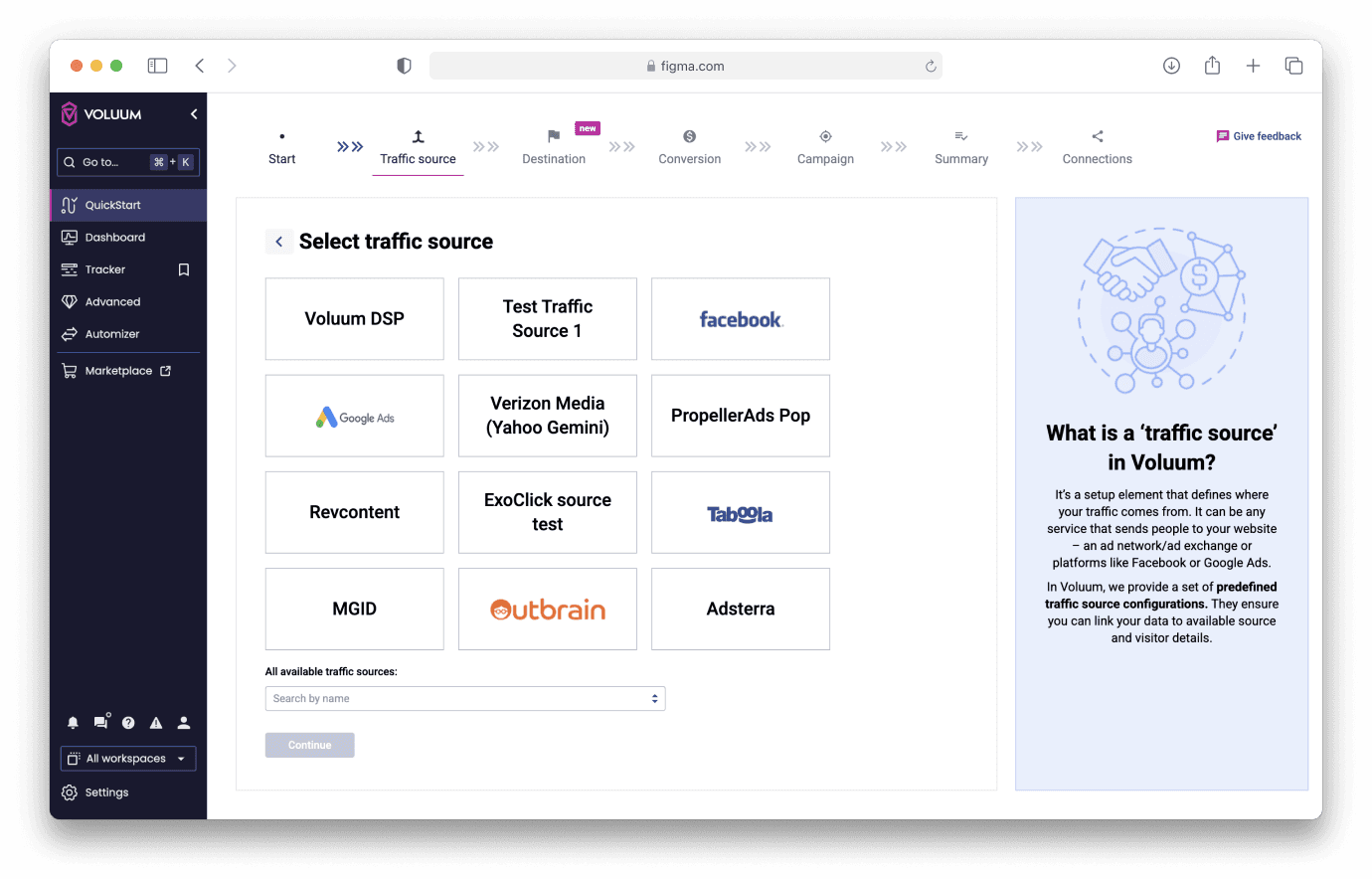
Context
Years of development had made Voluum Tracker powerful — and complex. Flows assumed deep knowledge of tracking concepts. Novice users, especially those without prior tracker experience, defaulted to trial and error for their first campaign, no matter how many tutorial videos existed.
Problem
- The flow was built for experienced users, leaving beginners behind
- First-time setup required too much prior knowledge
- Removing onboarding calls from basic plans directly increased churn
- Documentation wasn't flexible enough to cover diverse use cases
Evidence came from four directions: Hotjar session recordings, support ticket patterns, chat logs, and YouTrack reports. All pointed at the same wall — the first campaign.
Process & solution
- Audited system request data to define every key component of campaign creation
- Filtered with CS/AM teams for real-world usage patterns, not theoretical ones
- Built a guided quick-start that mimics the actual setup process — learning by doing, not by reading
- Progressive disclosure: defaults up front, complexity later
- Inline explanations at each step, where confusion actually happens
- Covered 80%+ of first-use scenarios in the initial flow design
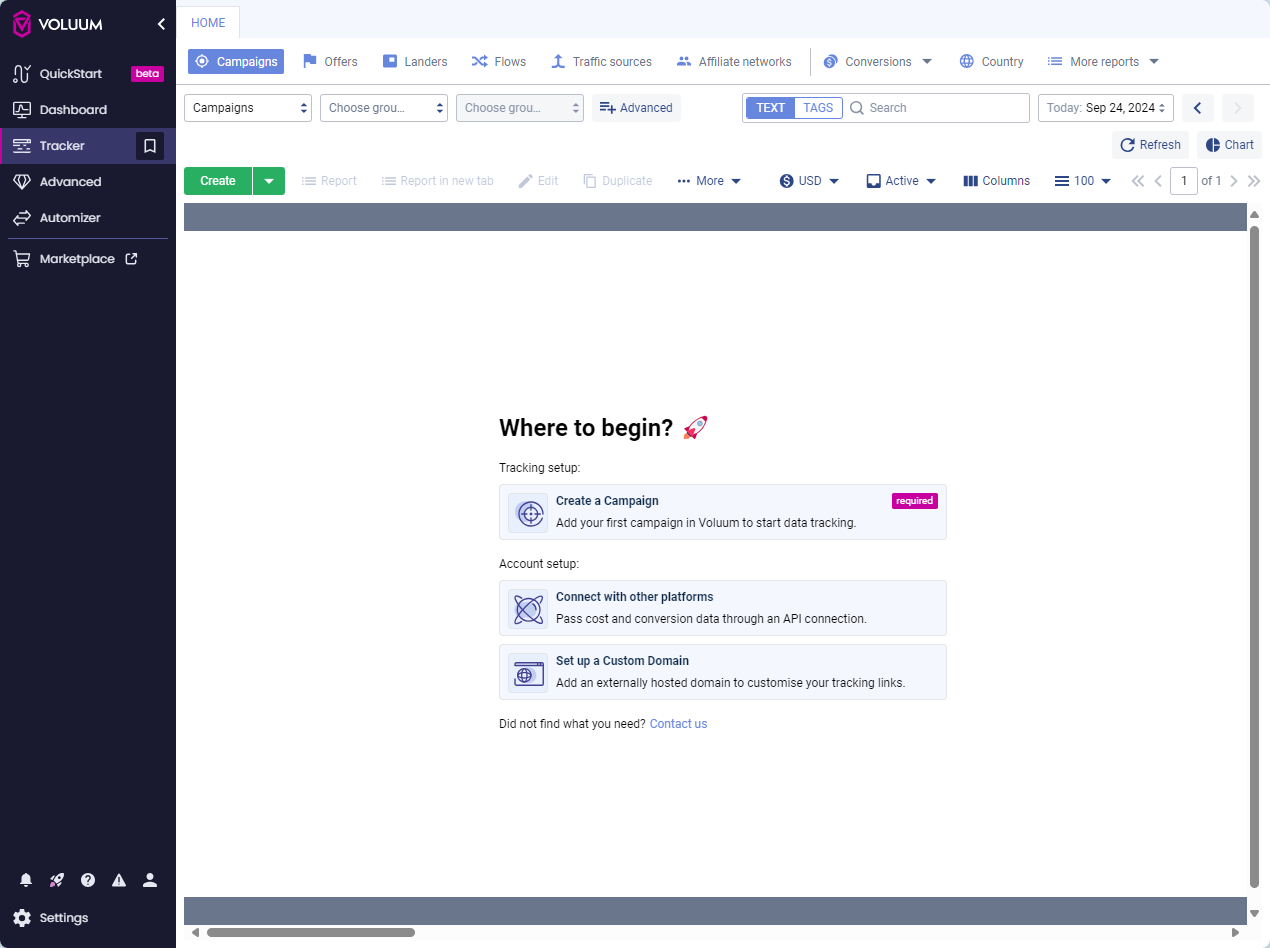
The shipped flow walks a new user through seven steps — Start → Traffic source → Offer → Conversion → Campaign → Summary → Connections — mirroring a real campaign setup. No prior configuration needed: users arrive with nothing but an offer URL and leave with a working, trackable campaign link.
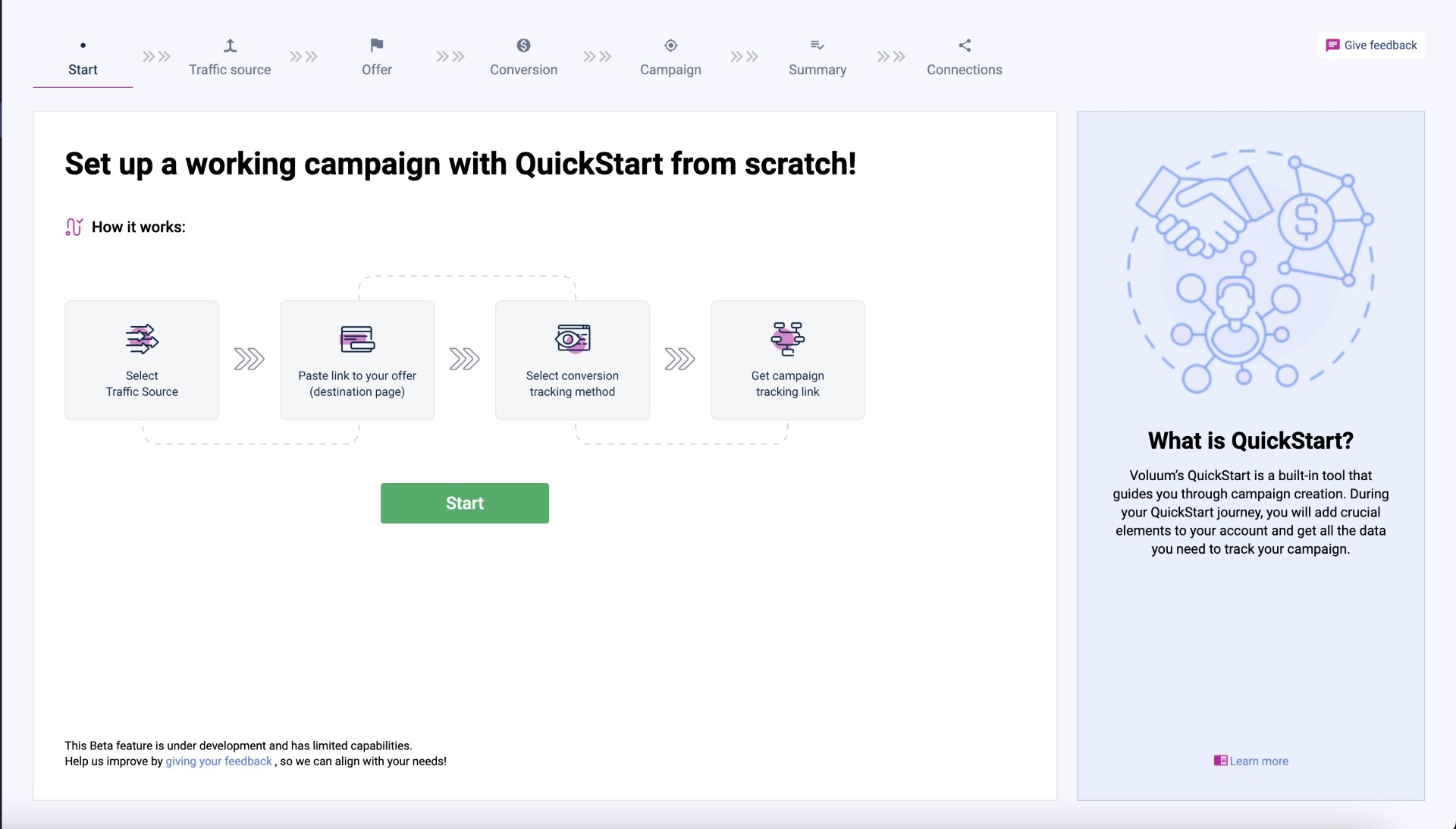
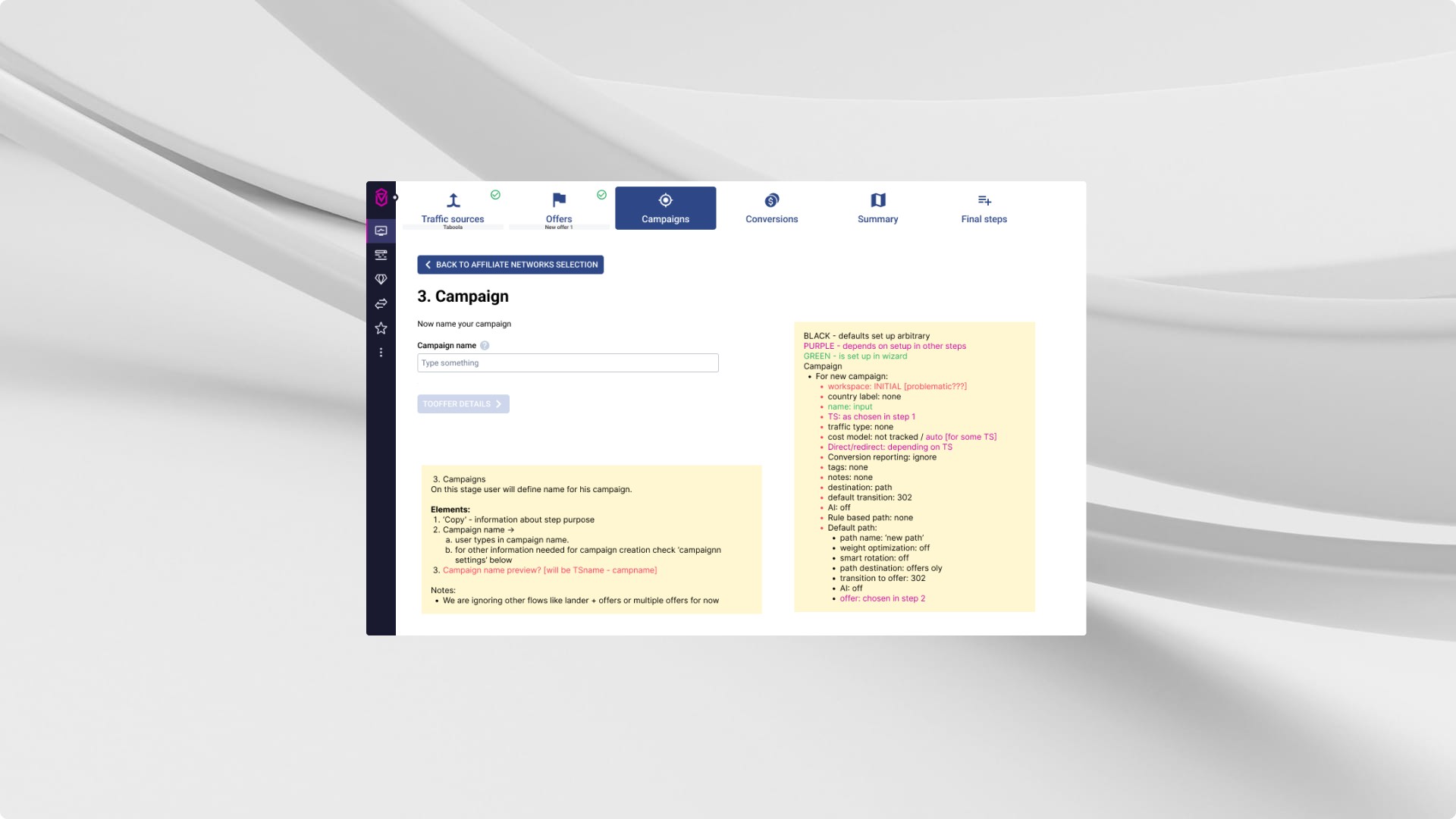
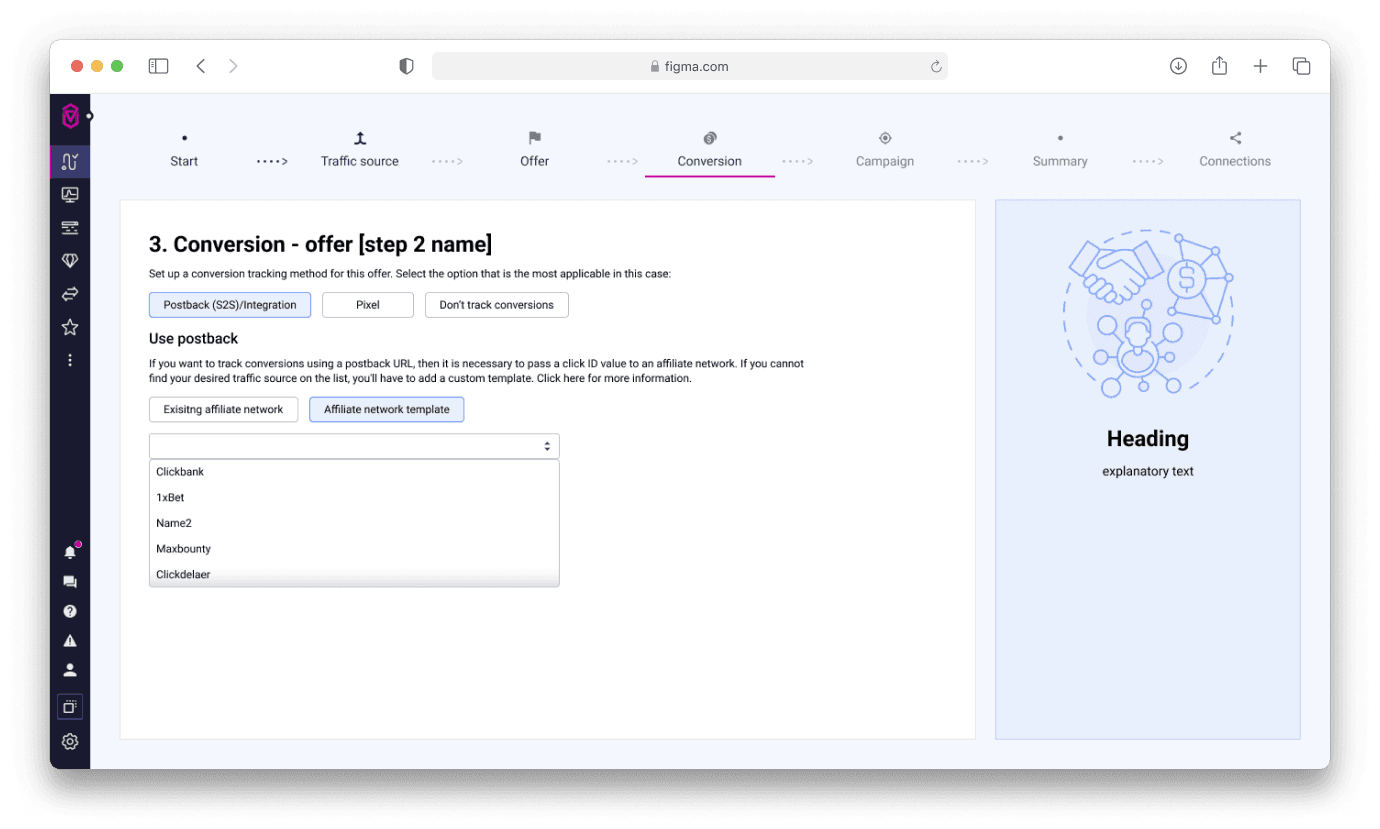
Shipped — and public
QuickStart went live for all Voluum users, announced in the public changelog and documented as a self-served guide — "create a working campaign in one go without jumping between different screens."
Results
−8%reduction in first-month churn after release
21%of newcomers used the quick-start within their first 10 sessions
80%+of first-use scenarios covered by the initial flow
- Onboarding sessions became shorter and more efficient
- Highly positive feedback from users and internal teams
- Core design and early development owned by me; final rollout transitioned to the maintenance team
Onboarding as product, not content — the quick-start removed friction inside the flow itself, turning the first session from a blocker into a launchpad.